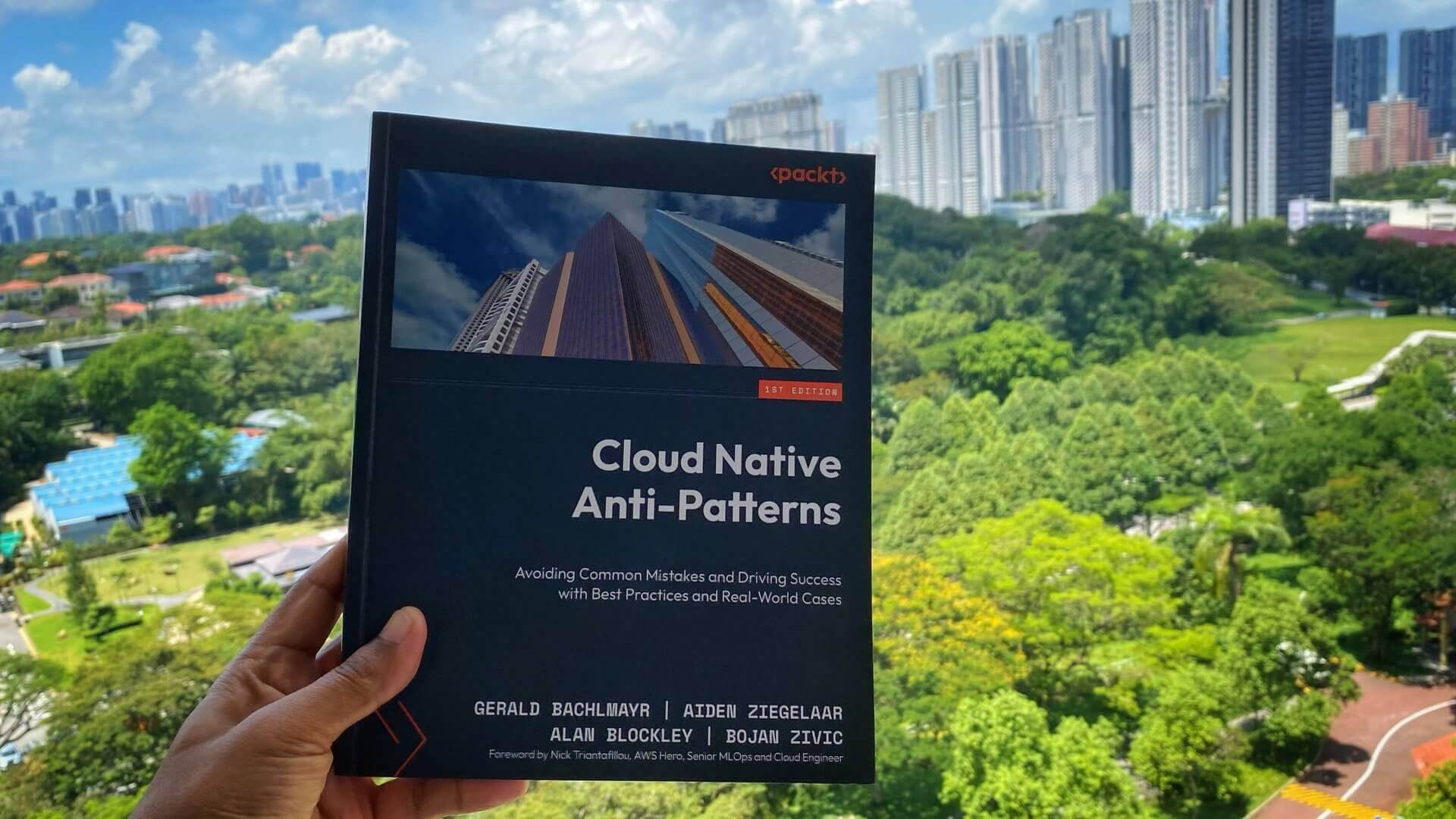
If you work on a cloud-native infrastructure team, or a planning or architecture team, Cloud Native Anti-Patterns needs to be sitting on your desk, next to your laptop. This isn’t just another buzzword cloud book — it’s a practical book that opens your eyes to what goes wrong with cloud strategies today and how to do better.
Written by Gerald Bachlmayr, Aiden Ziegelaar, Alan Blockley, and Bojan Zivic, the book starts with a solid foundation. You’ll get a quick but detailed introduction to key topics like DevOps, Infrastructure as Code (IaC), Agile, Edge Computing, Machine Learning, AI, and more. The authors do a great job of connecting these technologies with real-world needs, especially stressing the importance of observability, logging, and proper architecture.
But the real magic starts in Part 2, when the book shifts gear from theory to practice. It starts highlighting anti-patterns — widespread bad practices and blind spots many teams fall into without realising. These are not just technical loopholes but strategic and operational as well.
You will find yourself nodding to every point reading about:
- No migration strategy
- Poor visibility into cloud resources
- Mismanagement of operational costs
- Missing service catalogues
- Poor governance, risk, and compliance (GRC) structures
I especially enjoyed the detailed exploration of the Cloud Adoption Framework (CAF) and how it can be used effectively — something that is all too often forgotten in cloud projects. The GRC modules are also extremely insightful and assist in understanding why so many organisations struggle to deploy policies effectively.
Another highlight is the cost optimisation and resource tagging chapter — something every platform engineer knows that they must do but never quite gets around to. The book doesn’t just point out weaknesses; it offers practical implementation advice, allowing you to build a better, more scalable cloud-native platform.
Managing the likes of zero-downtime, security in dynamic environments, and legacy app migration isn’t easy, but the authors offer sound advice and action plans to contain them without your systems crashing.
Bonus: tables and diagrams are decent, concise, and useful — no filler.
Preet and Packt, thanks for sending me a copy. This one will stay on my reference shelf!

Gineesh Madapparambath
Gineesh Madapparambath is the founder of techbeatly. He is the co-author of The Kubernetes Bible, Second Edition and the author of Ansible for Real Life Automation. He has worked as a Systems Engineer, Automation Specialist, and content author. His primary focus is on Ansible Automation, Containerisation (OpenShift & Kubernetes), and Infrastructure as Code (Terraform). (Read more: iamgini.com)


 Nikhil Kumar