Authors: Ahilan Ponnusamy and Andreas Spanner
Reviewed by: John Heaton, Guillaume Poulet-Mathis, Sharad Gupta, and Thenna Raj
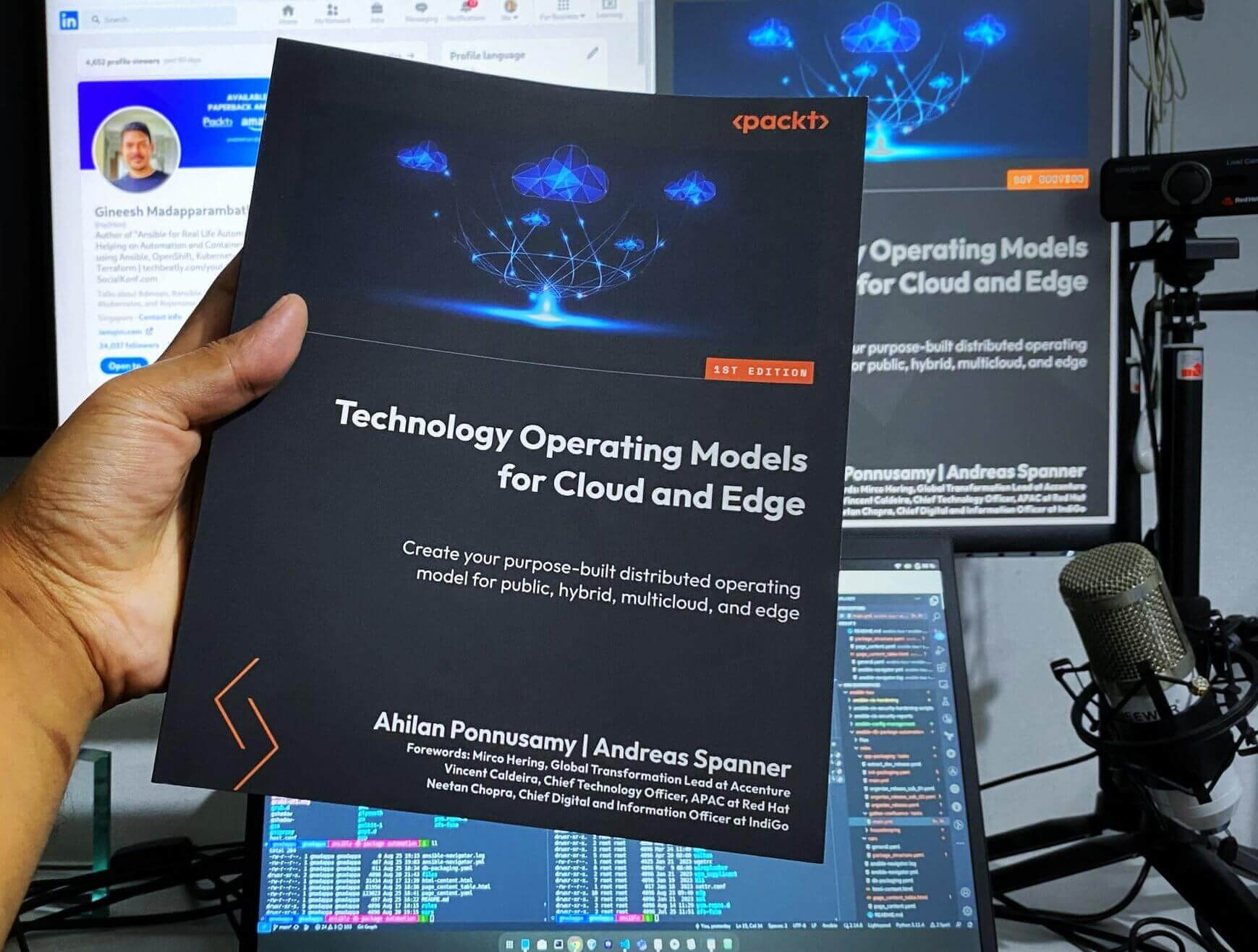
I just finished diving into the pages of “Technology Operating Models for Cloud and Edge,” a collaboration by Ahilan Ponnusamy and Andreas Spanner. And you know what? I’ve got some thoughts to share with you.
Now, before we kick off, let me get one thing straight – this ain’t your typical tech-heavy manual. No, it’s not going to flood you with lines of code or endless jargon. Instead, it’s all about the high-level stuff in cloud computing and edge strategies. So, if you’re looking for a conceptual take, this might be your sweet spot.
The journey starts with the building blocks – the fundamental concepts of cloud computing, edge strategies, and hybrid models. It’s like laying down the foundation before delving into the deeper waters. What caught my attention was the gradual transition into the strategies you need to keep an eye on – it’s like watching a puzzle come together, one piece at a time.
But let me tell you about the real gems here – the chapters that dissect distributed architecture and the intricacies of hybrid or multi-cloud strategies. They’re not just informative; they’re insightful. And let’s not forget the emphasis on regional compliance requirements – a reminder of the real-world hurdles you’ll face when dealing with multi-region strategies and their architectures.
But the book doesn’t stop at strategy; it goes full throttle into the world of IT infrastructure. From computing and control planes to data, storage, network, and security – the whole gamut gets covered. And guess what? It wraps it all up beautifully with a spotlight on applications.
Visual learners, rejoice! The book throws in diagrams and tables like breadcrumbs to guide you through the complex maze of cloud and edge operating models. It’s like having a GPS for tech challenges – and who wouldn’t want that?
Here’s the real kicker: if you’re a tech honcho, a CTO, or even a solution architect, this book deserves a spot on your shelf. The insights it dishes out have the potential to be your compass in the ever-evolving tech landscape.
A major tip of the hat to the authors – Ahilan Ponnusamy and Andreas Spanner – for assembling this treasure trove of wisdom. The simplicity and clarity you bring to the tech world are commendable.
And here’s a special shoutout to our reviewer squad – John Heaton, Guillaume Poulet-Mathis, Sharad Gupta, and Thenna Raj – for giving their two cents on this book. Your perspectives added extra flavour to the mix.
Last but not least, thanks to Linda Pearlson from Packt for putting this book on my radar. If you’re curious and want to snag your own copy, check it out here: Book Link .
Details:
- Title : Technology Operating Models for Cloud and Edge
- Authors : Ahilan Ponnusamy (he is my colleague at Red Hat), Andreas Spanner
- Reviewed by : John Heaton, Guillaume Poulet-Mathis, Sharad Gupta and Thenna Raj
- Forewords by : Mirco Hering (Global Transformation Lead at Accenture), Vincent Caldeira (Chief Technology Officer, APAC at Red Hat), Neetan Chopra (Chief Digital and Information Officer at IndiGo)

Gineesh Madapparambath
Gineesh Madapparambath is the founder of techbeatly. He is the co-author of The Kubernetes Bible, Second Edition and the author of Ansible for Real Life Automation. He has worked as a Systems Engineer, Automation Specialist, and content author. His primary focus is on Ansible Automation, Containerisation (OpenShift & Kubernetes), and Infrastructure as Code (Terraform). (Read more: iamgini.com)


 Shailaja Korra