
Fortunately Red Hat is offering some of the basic courses free of charge and you can enroll with a valid email ID. Honestly, theses are basic courses but more than enough for you to understand the platform.
Disclaimer : This site is independent of and does not represent Red Hat, Inc. in any way. Red Hat does not officially sponsor, approve, or endorse this site or its content. There is no promotional content in this post either.
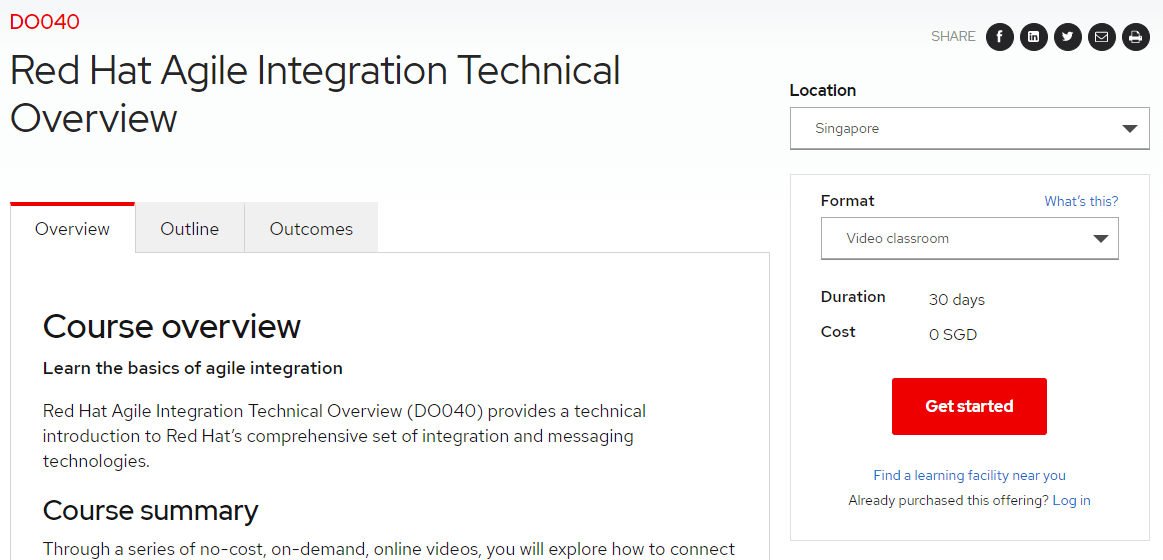
[FREE] DO040 – Red Hat Agile Integration Technical Overview
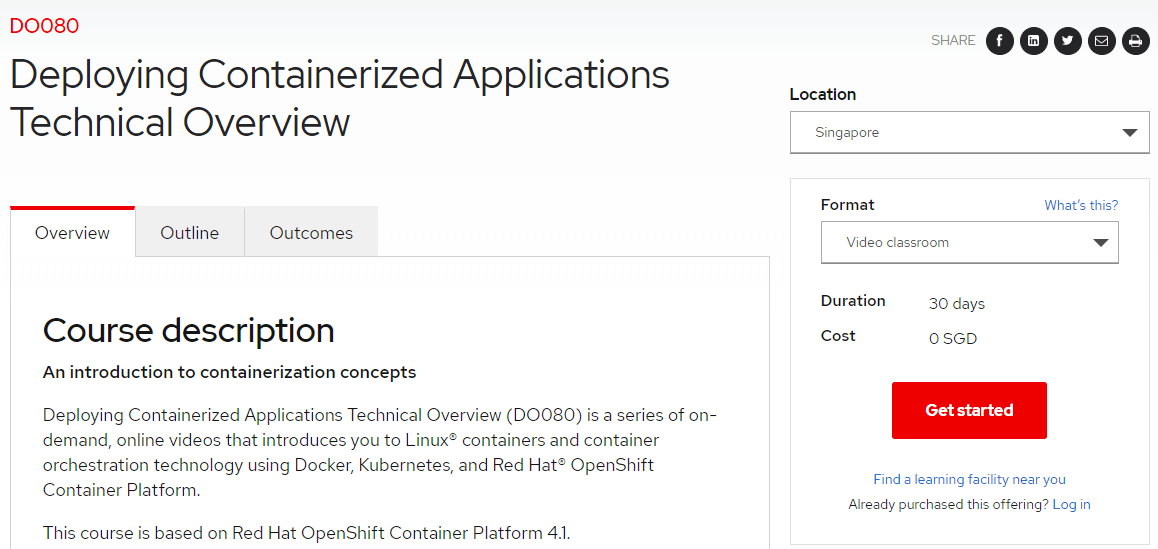
[FREE] DO080 – Deploying Containerized Applications Technical Overview
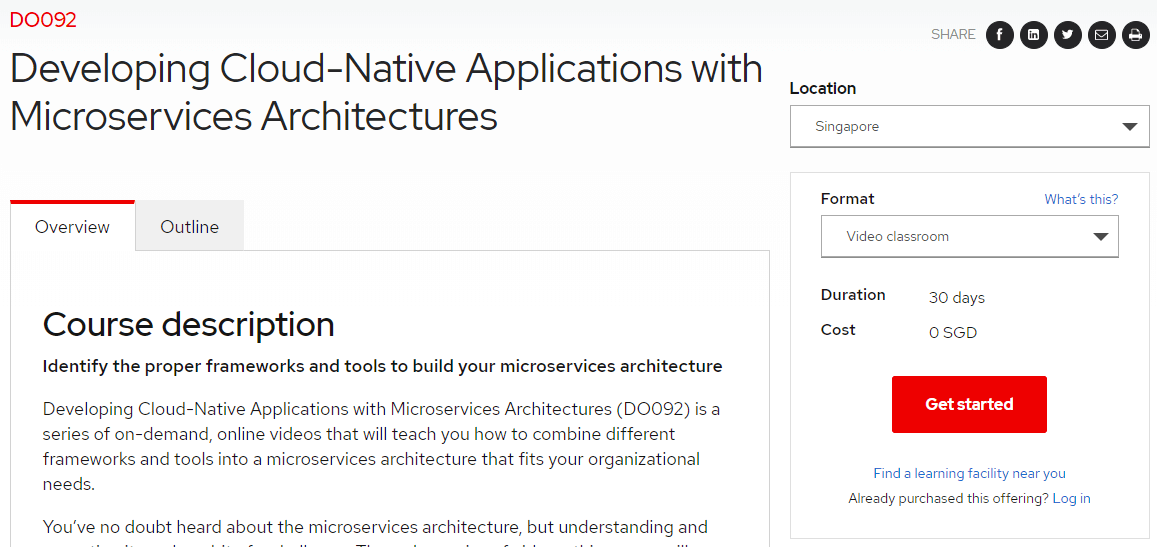
[FREE] DO092 – Developing Cloud-Native Applications with Microservices Architectures
Interesting ? Want to Learn More ?
Okay, then you can choose the track as OpenShift Administrator or OpenShift Application Developer or DevOps track. See course details below. But those are NOT FREE and you need to go via subscription or via training centers.
- Introduction to OpenShift Applications | DO101
- Intro to containers, Kubernetes, and Red Hat OpenShift (DO180)
- Red Hat OpenShift Administration I (DO280)
- Containers, Kubernetes, and Red Hat OpenShift Administration I (DO285)
- Red Hat OpenShift Development I: Containerizing Applications (DO288)
- Red Hat OpenShift Development II: Creating Microservices with Red Hat OpenShift Application Runtimes (DO292)
- Red Hat OpenShift Administration II (DO380)
- etc
See all available OpenShift related courses in Red Hat Training portal.

Gineesh Madapparambath
Gineesh Madapparambath is the founder of techbeatly. He is the co-author of The Kubernetes Bible, Second Edition and the author of Ansible for Real Life Automation. He has worked as a Systems Engineer, Automation Specialist, and content author. His primary focus is on Ansible Automation, Containerisation (OpenShift & Kubernetes), and Infrastructure as Code (Terraform). (Read more: iamgini.com)


 Muhammad Aizuddin Zali



 Aneesh Mohan